


























What to Know About Uterine Fibroids During Pregnancy


Uterine fibroids can be life-altering for some women, and they don’t magically go away when you get pregnant. If you have a history with fibroids, it’s understandable to wonder how they’ll impact your pregnancy and what kind of treatment, if any, may be available to you. Ditto if you suddenly develop fibroid-like symptoms while expecting. If you suspect you have uterine fibroids during pregnancy, talk to your doctor. In the meantime, here’s the lowdown on uterine fibroids and pregnancy.
Uterine fibroids are tumors—almost always benign—that grow in the muscular tissue of the uterus. According to the US Office on Women’s Health (OWH), fibroids can grow as just one tumor or there can be many of them in the uterus, and they can range in size from as small as an apple seed to as large as a grapefruit. A fibroid may stay very small for a long time and then grow rapidly, or grow slowly over a period of years. They can prompt abdominal pain and other symptoms, but other times a woman may not even know she has uterine fibroids until they’re revealed during a pelvic exam or prenatal ultrasound.
Types of uterine fibroids
Uterine fibroids are generally classified into three categories, explains Gloria Bachmann, MD, professor in the department of obstetrics, gynecology and reproductive sciences and associate dean of women’s health at Rutgers Robert Wood Johnson Medical School. They are:
-
Intramural fibroids, which grow within the walls of the uterus but stay outside of the uterine cavity.
-
Submucosal fibroids, which push into the uterine cavity.
-
Subserosal fibroids, which grow on the outside of the uterus.
Are uterine fibroids cancerous?
Fibroids are almost always not cancerous, says Michael Cackovic, MD, a maternal-fetal medicine physician at The Ohio State University Wexner Medical Center.
In very rare cases, someone may experience a cancerous fibroid called a leiomyosarcoma, but according to the OWH, it’s not thought that they form from an existing fibroid. Having uterine fibroids also does not increase your risk of developing a cancerous fibroid or your risk of uterine cancers.
It’s not entirely clear what prompts uterine fibroids to develop, but the OWH says researchers suspect that factors like hormones—specifically estrogen and progesterone levels—and genes could play a role. According to the OWH, up to 80 percent of women develop fibroids by the time they reach 50, and they’re most common in women in their 40s and early 50s.
Fibroids are more common in Black women than white women, and also seem to happen at a younger age and grow more quickly in Black women. The reason isn’t entirely clear, “except we do understand that there’s a genetic predisposition to fibroids,” says Angela Chaudhari, MD, associate professor in the department of obstetrics and gynecology at the Northwestern University Feinberg School of Medicine. “There’s a lot of ongoing research on why that is,” she adds.
Most women who have uterine fibroids have normal pregnancies, the OWH says, although the presence of these growths increase your risk of complications during pregnancy and delivery. Fibroids have historically been linked to miscarriage and pre-term birth, but Cackovic says that the research has generally been “flawed,” noting that there are so many other factors that go into these outcomes that it’s difficult to say for sure if fibroids are a cause. Worth noting: A 2017 study published in the American Journal of Epidemiology found that there was no link between uterine fibroids and miscarriage.
In rare cases, fibroids may cause infertility, but the American College of Obstetricians and Gynecologists (ACOG) says women will often be able to become pregnant after they’re treated for the condition. If you have a known history of fibroids, Chaudhari recommends talking to your doctor about having any fibroids that are in the cavity of your uterus removed before trying to conceive.
Overall, Cackovic says that pregnant women with fibroids shouldn’t stress about the condition. “Uterine fibroids tend to breed anxiety amongst patients, when the truth of the matter is that they aren’t usually going to have any problems in pregnancy,” Cackovic says. “Sometimes patients don’t even know they have them and we’ll see them on ultrasound.”
Fibroids can be “masked” during pregnancy, Chaudhari says—meaning, the signs of uterine fibroids can be easily confused with common pregnancy symptoms. The following can be symptoms of uterine fibroids during pregnancy:
- Pelvic pressure or pain
- Lower back pain
- Pain during sex
- Spotting or bleeding
- Frequent urination
- Constipation
- Abdominal heaviness or swelling
However, some women with fibroids have no symptoms at all.
How to diagnose uterine fibroids
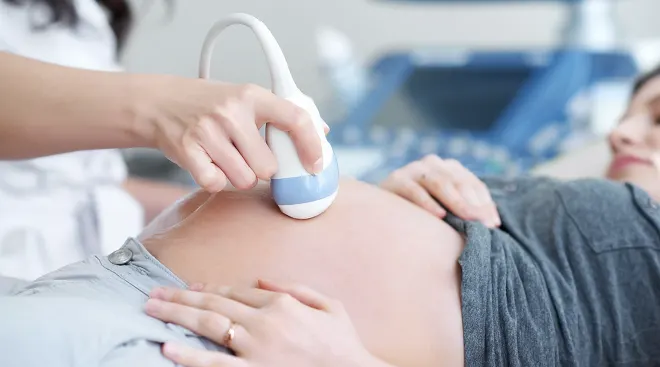
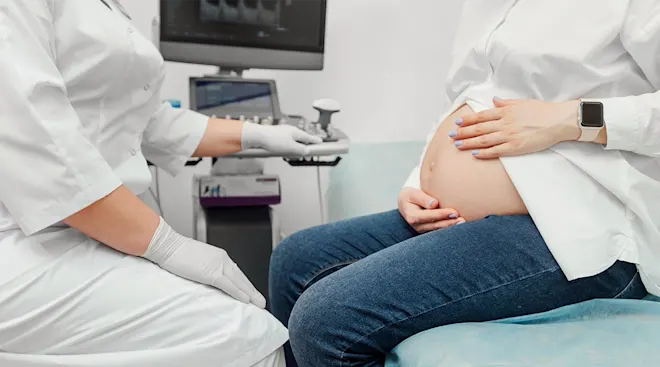
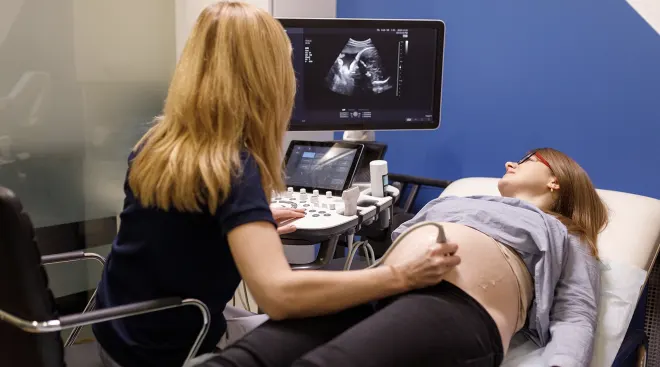
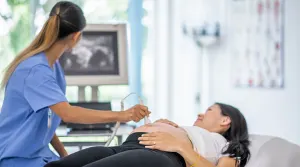
There are several tests that can diagnose uterine fibroids when you’re not pregnant. But during pregnancy, Cackovic says they’re often detected on ultrasound.
Typically, Chaudhari says, your prenatal care won’t change simply because you have uterine fibroids. Rather, your doctor will keep an eye on your fibroids as baby grows. “It wouldn’t change our management of their delivery or prenatal care,” she says.
Uterine fibroids can cause pain during pregnancy. While it’s usually “short-lived,” Chaudhari says, it can cause “pretty significant pain for a week to 10 days.” The reason, she says, is that as baby grows, blood supply can be shuttled from the fibroids to the growing fetus, causing the tumors to die off.
If you’re in pain from fibroids during your pregnancy, Chaudhari recommends talking to your doctor. As a uterine fibroid treatment, they may suggest anti-inflammatory medications to control the pain or potentially stronger pain medication. If you’re having uterine fibroid pain during your pregnancy, don’t just assume you have to soldier through it. “Seek immediate care,” Bachmann says.
About the experts:
Gloria Bachmann, MD, is a professor in the department of obstetrics, gynecology and reproductive sciences. She also serves as associate dean of women’s health at Rutgers Robert Wood Johnson Medical School and director of the Rutger’s RWJMS Women’s Health Institute.
Michael Cackovic, MD, is an ob-gyn specializing in maternal fetal medicine at the Ohio State University Wexner Medical Center in Columbus. He earned his medical degree from Hahnemann University College of Medicine in 1997.
Angela Chaudhari, MD, is an associate professor in the department of obstetrics and gynecology at the Northwestern University Feinberg School of Medicine. She earned her medical degree from Northeast Ohio Medical University College of Medicine in 2000.
Please note: The Bump and the materials and information it contains are not intended to, and do not constitute, medical or other health advice or diagnosis and should not be used as such. You should always consult with a qualified physician or health professional about your specific circumstances.
Plus, more from The Bump:
Navigate forward to interact with the calendar and select a date. Press the question mark key to get the keyboard shortcuts for changing dates.