



























Your Age-by-Age Guide to Baby Naps



New parents anxiously await the day baby starts sleeping through the night. But daytime sleep can be just as important to making sure your little one is well-rested and developing healthy sleep habits. Read on to learn why baby’s naps are non-negotiable, and what a baby nap schedule should look like during the first year of life, based on your little one’s age.
Whenever we manage to sneak in a catnap, it seems like a luxury, but naps are essential for babies. “Particularly for children under 3 years of age, naps are the glue that holds young ones together throughout the day,” says Kira Ryan, cofounder of Dream Team Baby, a New York City–based infant and toddler sleep consultancy. “Children who nap well tend to be better eaters, more engaged in their environment, less likely to catch that virus floating around the playground and be better nighttime sleepers.”
Setting—and sticking to—a consistent baby nap schedule, with naps spaced at regular intervals throughout the day, is crucial to making sure your little one is getting enough sleep. Many parents assume that if baby skips a nap during the day, they’ll be extra-tired and sleep better at night. But in reality, the opposite is true, says Kim West, LCSW-C, a baby sleep coach known as The Sleep Lady and author of the book The Sleep Lady’s Good Night Sleep Tight: Gentle Proven Solutions to Help Your Child Sleep Well and Wake Up Happy. Our natural circadian rhythms tell our bodies when to be asleep and when to be awake, she explains. When baby doesn’t get any cues to go to sleep, their body produces a stress hormone that gives them a second wind, making it harder to go and stay asleep when the time comes. “Baby will then start their day tired, leading to a difficult night’s sleep the next night,” West says. “Sleep begets sleep.”
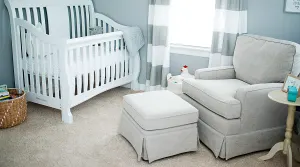
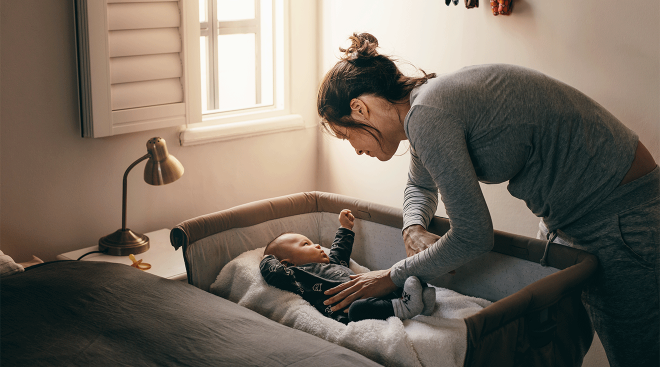
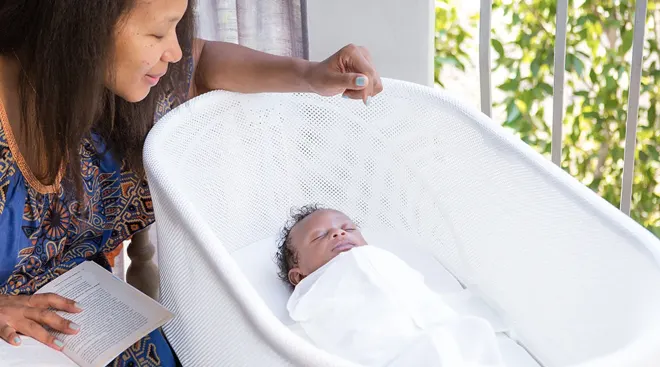
Ideally, baby’s naps should be taken in the same place every day—consistency will make it easier for your little one to fall and stay asleep. Usually that place is where baby sleeps at night, either in a crib or bassinet, which are generally the safest, most comfortable places for infants to sleep.
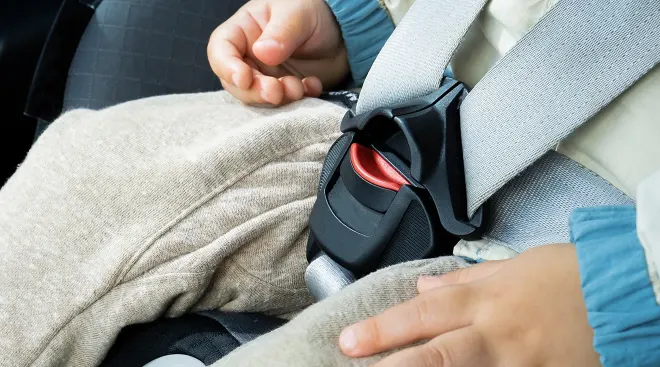
Of course, it’s not always possible to have a nap in their usual spot. If you need to have baby nap on the go, it’s okay for them to occasionally sleep in a stroller or car seat, but it shouldn’t be the norm. (And if baby falls asleep in the car, take them out of the car seat as soon as you get home to lower the risk of a sleep-related death.) “A baby napping in a dark bedroom with space to get comfortable will have much more predictable and nourishing sleep than a baby being pushed in a stroller who’s at risk for being awoken by a passing ambulance,” she explains.
So how many naps should baby take? The guidelines below give you a general idea of the overall amount of sleep most babies should be getting at each stage in the first year of life. But, of course, every child is different and has varying sleep needs. Some babies are snack-size nappers who take short catnaps throughout the day, while others take longer but fewer naps.
At the end of the day, it’s less important how many naps baby takes; how much sleep baby gets in total is what really counts. “I like to tell parents that these are just averages," West says. "Is your baby’s total range within an hour of the average, give or take? If your child gets a little less or more than the average and is growing and thriving and not having meltdowns more than the average toddler, then you’re okay.”
0 to 4 months
Daytime/nighttime sleep: Because newborns can’t tell the difference between day and night, they can’t stick to a daytime baby nap schedule. Rather, sleep is an around-the-clock affair.
Total: 12 to 18 hours
Things to keep in mind: During this early period, babies are still working out any kinks, so don’t stress too much about a nap schedule. “There’s a huge range in how and when babies nap between 0 to 4 months based on feeding, neurological development, GI issues, physical development, etc.,” Ryan says. Instead, focus on helping baby sort out day/night confusion: When it’s time for a nap or nighttime sleep, put your child down in a quiet environment with dim lighting, West suggests, and expose baby to plenty of light and activity during the day.
4 to 6 months
Daytime sleep: 3 to 4 hours (two to three naps)
Nighttime sleep: 11 to 12 hours
Total: 14 to 16 hours
Things to keep in mind: Around 4 months, many babies experience what’s known as “sleep regression,” when they start to resist naps. At this age, baby will begin to cycle through different stages of sleep (deep sleep and active sleep), much like an adult, West says. During active sleep, baby has a startle reflex that can wake them up easily and often, and putting themselves back to sleep is still a challenge. The 4-month sleep regression usually lasts for only two to three weeks. In the meantime, West suggests trying different tricks to get your little one to nap, such as rocking or feeding them. Ocassionally letting baby nap on the go or in the stroller during this challenging stage may help too. Once the regression passes, it may be time to start gentle sleep training.
6 to 9 months
Daytime sleep: 2 to 3.5 hours (two to three naps)
Nighttime sleep: 11 to 12 hours
Total: 13 to 15.5 hours
Things to keep in mind: Each age group comes with its own baby milestones that can disrupt sleep, West says—and the 6 to 9 month period is chock-full of important developments. This is when baby may start creeping (pushing themselves around on their tummy), crawling and standing up while holding onto something (like the crib bars). With so much going on, baby may be too distracted or wired to easily settle down come naptime.
9 to 12 months
Daytime sleep: 2 to 3.5 hours (two naps)
Nighttime sleep: 11 to 12 hours
Total: 13 to 15.5 hours
Things to keep in mind: “Sometime between 9 and 12 months, babies will take a huge morning nap and then not want to take an afternoon nap,” West warns. “If that’s the case, make the morning nap only an hour-and-a-half or 45 minutes long. Afternoon naps are super-important to help babies make it to bedtime and not be overtired, which will, in turn, help them sleep better overnight.” Many parents are tempted to cut baby’s nap schedule down to just one at this point, but West says children really aren’t ready for just a single nap until they’re 15 to 18 months old.
Please note: The Bump and the materials and information it contains are not intended to, and do not constitute, medical or other health advice or diagnosis and should not be used as such. You should always consult with a qualified physician or health professional about your specific circumstances.
Plus, more from The Bump:
Kira Ryan is the cofounder of Dream Team Baby, a New York City–based infant and toddler sleep consultancy, and is mother to three young children.
Kim West, LCSW-C, is a baby sleep coach known as The Sleep Lady and has been in practice for more than 20 years. She is also the author of the book The Sleep Lady’s Good Night Sleep Tight: Gentle Proven Solutions to Help Your Child Sleep Well and Wake Up Happy.
Learn how we ensure the accuracy of our content through our editorial and medical review process.
Navigate forward to interact with the calendar and select a date. Press the question mark key to get the keyboard shortcuts for changing dates.






![Tan France, celebrity personality from the popular TV shoe]w Queer Eye.](https://images.ctfassets.net/6m9bd13t776q/2uqRZn7bkb4nWv28drOW16/98b7493289f8f84d699ffa7516be8f90/tan-france-baby-sleep-products-660x367.jpg?q=75&w=660)